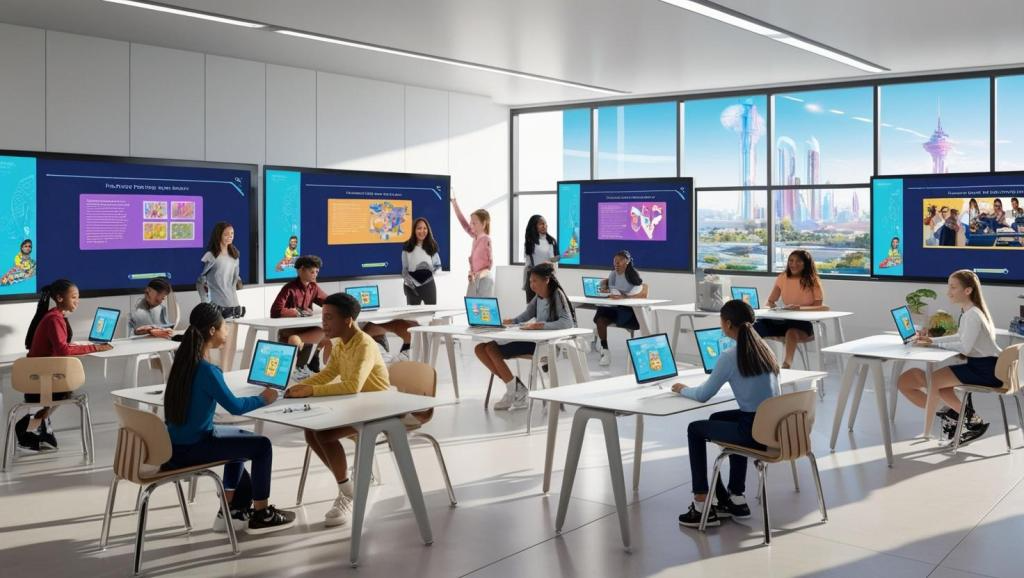
Welcome to 2025! The evolution of education has been in the works for decades. Society has advanced in many areas, yet public schooling has been slow to surge ahead. When schools were transitioned online during COVID in 2020, parents were given access to their students’ classroom atmosphere, and many did not like what they witnessed. Data suggests the number of high school students enrolled in public school alternatives post-COVID hovers around 12 percent.
Free from the reins of public schooling’s one-size-fits-all curriculum and state testing, Mastery Academics School (MAS) brings high school subjects to life. Students want to experience real-world application of topics instead of fairy tales and irrelevance. MAS, set to welcome its first class of students on Sept. 3, 2025, uses research-based learning models that are reserved as good-to-have and makes them a must-have.

Mastery Academics High School (MAHS), a microschool for high school-age teens, envisions a place where students apply authentic learning to core subjects through collaboration and critical thinking.
MAHS functions closer to a homeschool, with student expectations that challenge high schoolers and support every level of their learning. The belief is that students should not have to risk their mental health to acquire exceptional learning.
Threats to public school education have led districts to introduce alternative learning options for students; however, they are still tied to state testing and linear teaching. Thus, for the most part, some students experience frustration, disengagement, and boredom. It’s important to note that not all students find high school boring. However, students know they have other options to learn what they need to know, such as YouTube, generative AI chatbots, and social media. The problem, unfortunately, is that unmonitored options may not be accurate or may not achieve the formal education requirements for employment opportunities.
In an era where education must evolve to meet the diverse needs of high school students, microschools like MAHS provide a refreshing and innovative approach. By prioritizing personalized learning, practical application, and mental well-being, MAHS demonstrates that education can be engaging, meaningful, and tailored to individual success. The future of learning is here, and microschools are proving that when education aligns with students’ needs and aspirations, everyone wins.